Fast Charging vs. Slow Charging — Which One Is Actually Better for Your Battery?
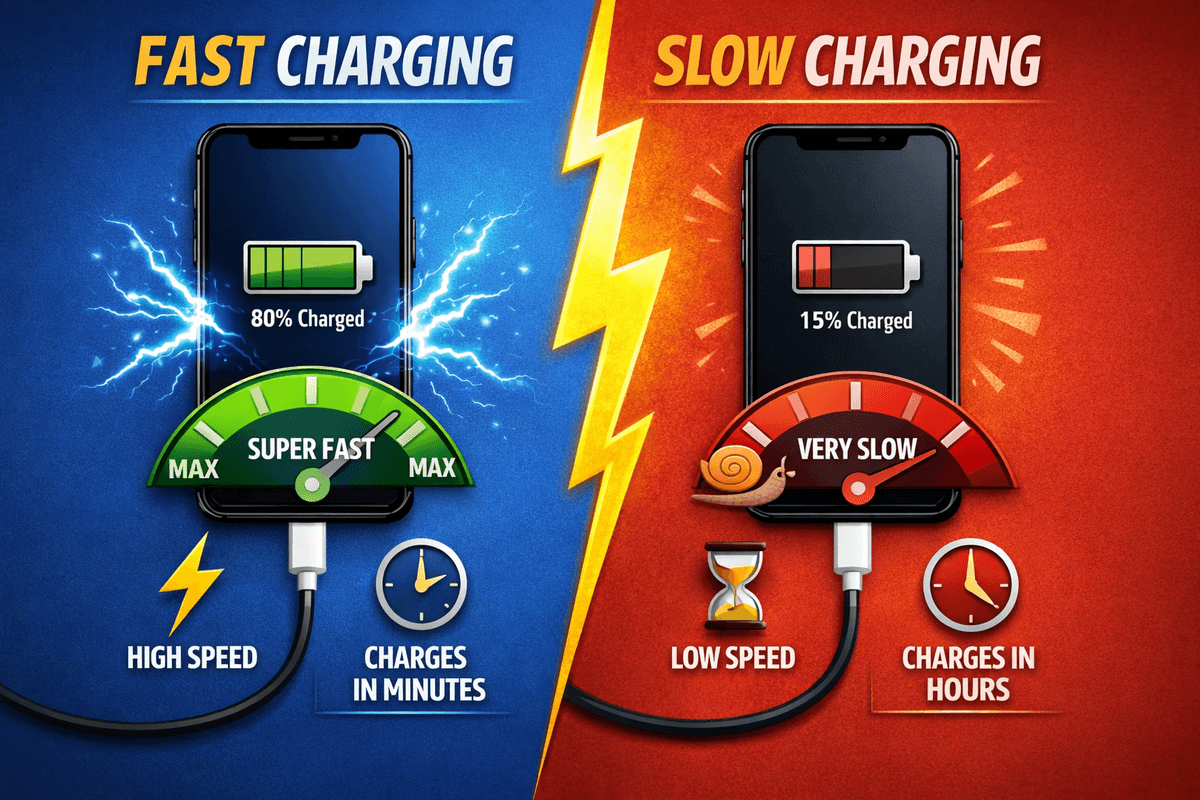
In today's fast-paced world, nobody wants to sit around waiting hours for their phone to charge. Fast charging has become one of the most talked-about features in modern smartphones, promising a significant battery boost in just minutes. But alongside all the excitement, a nagging question keeps coming up — is fast charging actually damaging your battery in the long run?
We've all heard someone say "fast charging ruins your battery" at some point. But is that actually true, or is it just a myth that's been passed around for years? In this guide, we're going to break everything down — how charging actually works, the real pros and cons of fast and slow charging, and which option is genuinely better for your device and your lifestyle.
How Does Phone Charging Actually Work?

Before jumping into the fast vs. slow debate, it helps to understand what's actually happening inside your phone when you plug it in.
Most modern smartphones, tablets, and laptops use lithium-ion (Li-ion) batteries. These batteries work through a remarkably simple chemical process. When you use your phone, tiny particles called lithium ions travel from one side of the battery to the other, and that movement generates power. When you charge your phone, the process simply reverses — electricity from the outlet pushes those lithium ions back to their original side, restoring the battery's energy.
Now here's where charging speed comes in. Charging speed is measured in watts (W), which is a product of voltage (V) and current (A). The higher the wattage, the more power is being pushed into the battery at once — and the faster it charges. A standard 5W charger delivers power slowly and gently, while a 65W or 120W fast charger delivers a much larger burst of power in a shorter time.
Understanding this basic principle makes it much easier to understand why fast charging behaves the way it does — and why it sometimes gets a bad reputation.
The Science Behind Fast Charging
Fast charging isn't simply a matter of forcing more electricity into your battery as quickly as possible. If it were that simple, it would be dangerous and damaging every single time. In reality, fast charging is a carefully managed, two-stage process controlled by intelligent chips built into both your phone and your charger. Here's how it works:
Phase 1: Constant Current (0% to 80%)
When your battery is low — typically below 80% — the charger delivers power at the highest safe rate your device can handle. During this phase, the battery is in its most receptive state and can absorb large amounts of power quickly and efficiently. This is why you can go from 0% to 50% in as little as 20 to 30 minutes with a fast charger. The battery essentially drinks in the power with minimal resistance.
Phase 2: Constant Voltage (80% to 100%)
Once the battery crosses the 80% threshold, things change. Pushing more power into an already partially full battery becomes increasingly difficult, and doing so at full speed would generate dangerous levels of heat. So the charger automatically switches strategies — it keeps the voltage steady but gradually reduces the current. This slower, gentler approach safely fills the remaining 20% without stressing the battery.
This is exactly why charging from 80% to 100% always takes noticeably longer than charging from 0% to 80%. It's not a flaw — it's a deliberate and smart safety mechanism designed to protect your battery.
The Pros and Cons of Fast Charging
Like anything in life, fast charging comes with both advantages and drawbacks. Understanding both sides gives you a clearer picture of when to use it and when to hold back.
The Pros of Fast Charging
Unmatched Convenience The biggest and most obvious advantage of fast charging is speed. Getting several hours of battery life from just 15 to 20 minutes of charging is a game-changer for anyone with a busy schedule. Whether you're rushing out the door in the morning or need a quick top-up between meetings, fast charging delivers when you need it most.
Intelligent Safety Systems Modern fast charging isn't the reckless power dump it's often assumed to be. Today's fast charging systems involve constant communication between your charger and your phone to determine the optimal charging speed at every moment. This smart coordination prevents overcharging, overheating, and other forms of battery damage.
Widely Supported Across Devices Fast charging is no longer a luxury feature — it's become the standard across virtually all modern smartphones, tablets, and laptops. Whether you're on Android or iPhone, chances are your device already supports some form of fast charging.
The Cons of Fast Charging
It Generates More Heat This is the most significant downside of fast charging, and it's a real one. Delivering large amounts of power into a battery in a short period naturally produces more heat than a slower charge would. Heat is one of the biggest enemies of lithium-ion batteries — prolonged exposure to high temperatures gradually degrades the battery's capacity over time, meaning it won't hold as much charge as it once did.
Requires Compatible Equipment To get the full benefits of fast charging, your phone, charger, and cable all need to be compatible with the same fast charging standard. If any one of these components doesn't match, you'll fall back to a slower charging speed. It's not a huge inconvenience, but it's worth knowing before you invest in a new charger.
The Case for Slow Charging
With all the hype around fast charging, it's easy to dismiss slow charging as outdated and irrelevant. But slow charging actually has some meaningful advantages that are worth considering — especially if you care deeply about the long-term health of your battery.
The biggest benefit of slow charging is significantly less heat. When power is delivered slowly and steadily, the battery doesn't have to work as hard to absorb it, and far less heat is produced in the process. Less heat means less stress on the battery's internal chemistry, which translates to better battery health over the long term.
This makes slow charging an excellent choice for overnight charging. When you have eight hours of sleep ahead of you, speed is completely irrelevant. A slow, gentle charge gets your phone to 100% without the thermal stress of a fast charger. In fact, this is the principle behind the Optimized Battery Charging feature found on many modern iPhones and Android devices — the phone intentionally slows down the final portion of charging to reduce heat and extend battery lifespan.
If you're someone who plans to keep your phone for three, four, or five years, making slow charging a regular habit — particularly at night — can make a noticeable difference in how well your battery holds up over time.
Busting the Most Common Charging Myths
There's a lot of outdated and just plain wrong information floating around when it comes to battery care. Let's clear up some of the most persistent myths once and for all.
Myth #1: Fast Charging Will Destroy Your Battery
The Truth: This is one of the most exaggerated claims in the smartphone world. Yes, the extra heat generated by fast charging can contribute to slightly faster battery degradation over a long period of time. But modern fast charging systems are built with multiple layers of protection — temperature sensors, voltage regulators, and intelligent chips — that prevent the kind of catastrophic damage people imagine when they hear "fast charging destroys batteries." For the average person who upgrades their phone every two to three years, the difference in battery degradation between fast and slow charging is barely noticeable.
Myth #2: You Should Drain Your Battery to 0% Before Charging
The Truth: This advice was relevant decades ago for older nickel-cadmium batteries, but it's completely wrong for modern lithium-ion batteries. In fact, regularly draining your battery to 0% is actually harmful to it. Lithium-ion batteries are healthiest when kept between 20% and 80%. Frequent, partial top-ups are far better for battery longevity than letting your phone die completely before plugging in.
Myth #3: Non-Brand Chargers Are Always Dangerous
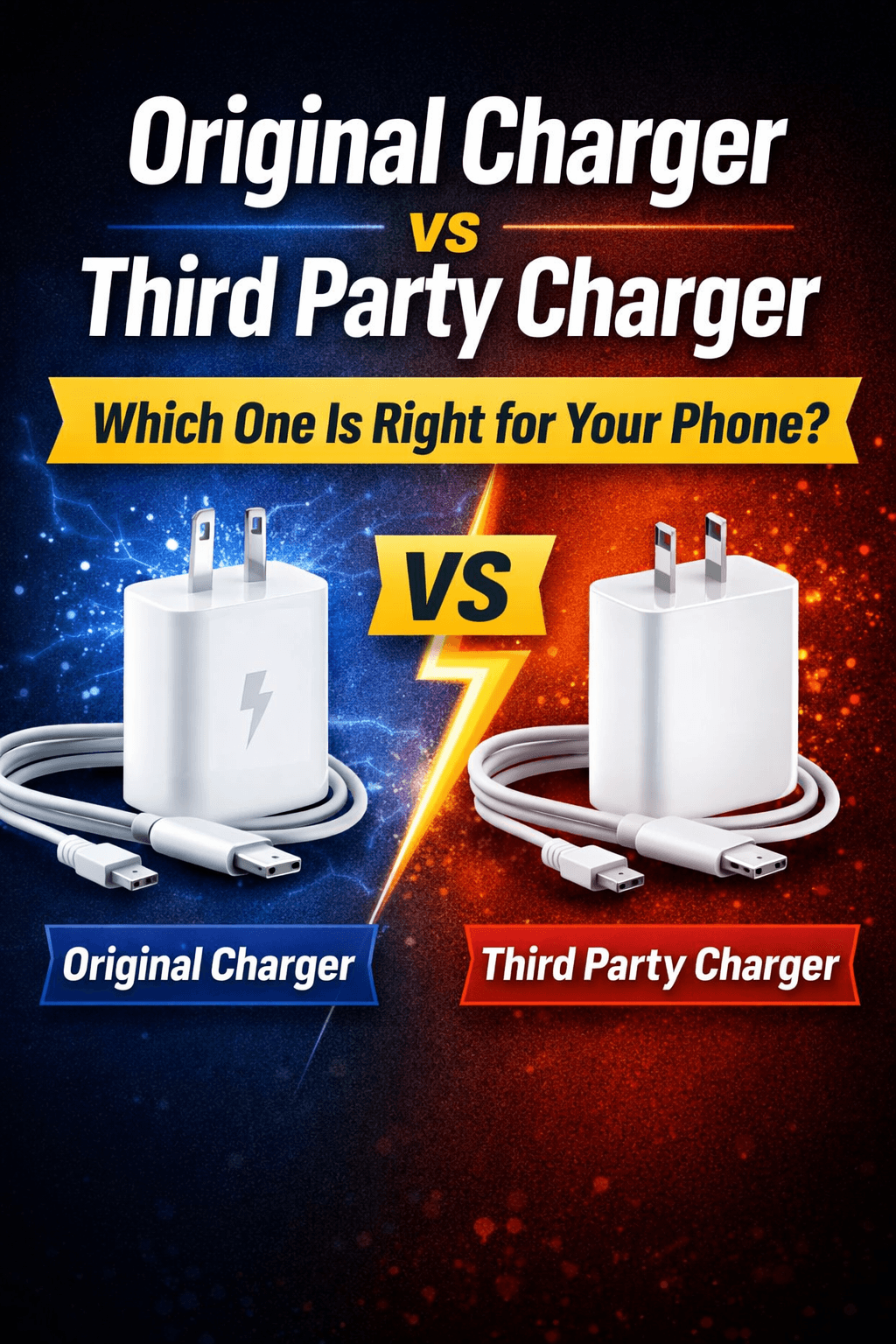
The Truth: The real concern isn't whether a charger is made by the same brand as your phone — it's about the quality of the charger itself. A certified charger from a reputable third-party brand that carries proper safety certifications (such as UL, CE, or FCC) is perfectly safe to use and won't damage your device. The chargers you need to avoid are the cheap, uncertified ones that cut corners on safety components and can cause real harm.
Smart Charging — The Best of Both Worlds
The debate between fast and slow charging often overlooks a more important point: the real answer isn't purely about speed, but about smart charging. The best approach combines the convenience of fast charging with the protective principles of slow charging.
Many modern smartphones already do this automatically. Features like Optimized Battery Charging on iPhone and Adaptive Charging on certain Android devices learn your daily habits and slow down the final stages of charging to reduce heat and battery stress. Taking advantage of these features is one of the simplest things you can do to protect your battery without sacrificing convenience.
Beyond built-in features, here are some smart charging habits you can adopt:
Avoid charging your phone to 100% every night — try to keep it in the 80–90% range when possible.
Don't let your battery drop to 0% — plug in before it hits 20%.
Use fast charging when you need speed, such as during the day when time is short.
Use slow or standard charging overnight when speed doesn't matter.
Keep your phone in a cool, ventilated spot while charging to minimize heat buildup.
These simple habits, applied consistently, can significantly extend the overall lifespan of your battery.
Fast Charging vs. Slow Charging — Which Is Actually Better?
After going through all the facts, the honest answer is: it depends on what you need.
Fast charging wins on convenience. For daily use, quick top-ups, and anyone with a busy lifestyle, the speed advantage of fast charging far outweighs the modest impact on long-term battery health. Modern fast charging is safe, smart, and designed to protect your device.
Slow charging wins on battery longevity. If preserving your battery health over many years is your priority — especially if you plan to keep your phone for a long time — slow, steady charging is gentler on your battery and will keep it healthier for longer.
The ideal approach for most people is to use both strategically. Fast charge during the day when you're pressed for time. Slow charge overnight when speed is irrelevant. Use your phone's built-in smart charging features to let the device manage the final stages of charging for you. That combination gives you the best of both worlds — the convenience of fast charging without unnecessarily sacrificing battery health.
Conclusion
The fast charging vs. slow charging debate doesn't have a single winner — and that's actually good news. It means you have options and can choose what works best for your lifestyle and your priorities.
Fast charging technology has come a long way. The systems built into modern smartphones and chargers are far more sophisticated and protective than they were even five years ago. You don't need to fear fast charging — you just need to use it wisely.
At the same time, slow charging remains a genuinely great option for anyone who wants to maximize battery longevity. A slow overnight charge is one of the simplest, most effective things you can do to keep your battery in great shape for years.
The bottom line? Invest in quality, certified chargers. Use fast charging when you need it. Default to slow or optimized charging when you don't. And always keep your phone in a cool, ventilated space while it charges. These simple habits will keep your battery — and your phone — in the best possible condition for as long as you own it.
Frequently Asked Questions

Written by
BatteryGuides Editorial Team
Our team of battery experts researches and tests every guide to ensure accuracy. We're committed to helping you get the most out of your phone, laptop, and solar batteries.