Original Charger vs Third Party Charger: Which One Is Right for Your Phone?
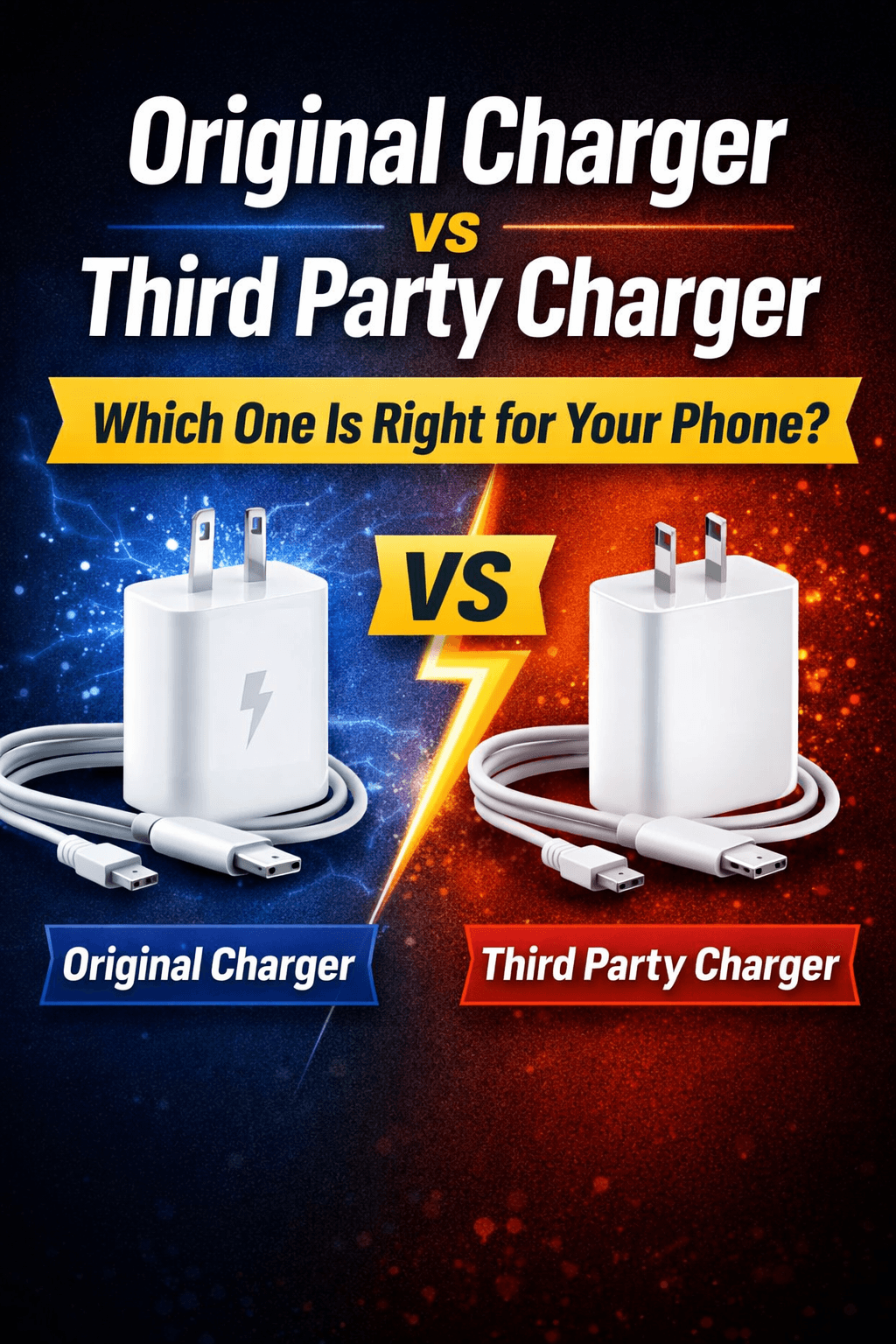
Table of Contents
- Why Your Charger Choice Actually Matters
- Original (OEM) Chargers: The Gold Standard
- Head-to-Head Comparison
- The Risks of Using a Low-Quality Third Party Charger
- When a Third Party Charger Makes Sense
- 1. You need multiple chargers for different rooms
- 2. You want multi-port or GaN charging
- 3. Your OEM charger is unavailable or discontinued
- 4. Travel charging
- How to Identify a Safe Third Party Charger
- Impact on Battery Health: The Long Game
- Verdict: Which Should You Choose?
Why Your Charger Choice Actually Matters
Most people treat chargers as interchangeable accessories — something to grab cheaply at a convenience store or airport kiosk. But the cable and adapter you use every night have a direct impact on your battery's lifespan, your phone's charging speed, and in some extreme cases, your personal safety.
Modern smartphones use sophisticated power delivery protocols — Apple's MFi, Qualcomm's Quick Charge, USB Power Delivery (USB-PD) — all of which require compatible, well-built hardware to work as intended. Not every charger on the market meets that bar.
Original (OEM) Chargers: The Gold Standard
Original / OEM
Manufacturer Approved
Guaranteed compatibility with your device
Certified safety standards met
Supports full fast-charging speeds
Protects battery health long-term
Warranty preserved
Higher price point
Easy to lose or damage
Third Party
Budget Alternative
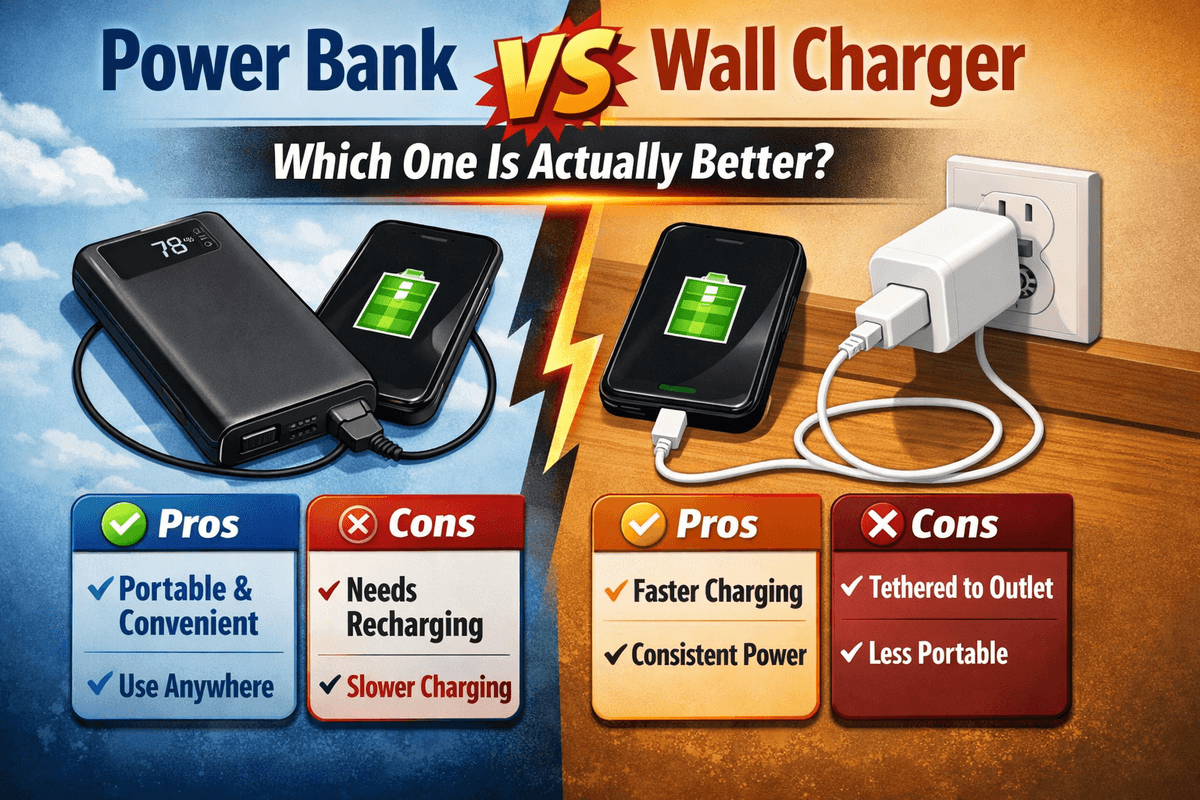
Significantly cheaper
Wide availability
Reputable brands can be very good
More ports / multi-device options
Quality varies wildly
Slower charging on some models
May void warranty
Unknown safety certifications
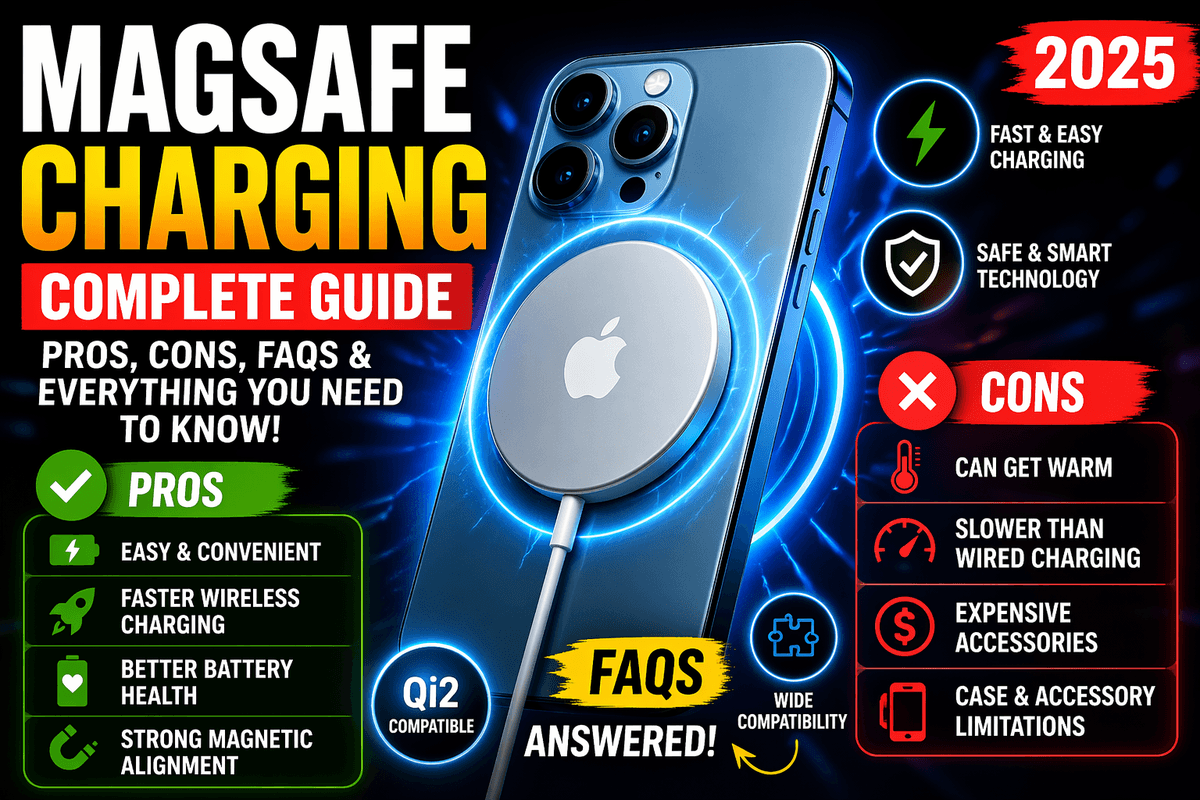
OEM chargers — those sold or certified by Apple, Samsung, Google, OnePlus, and other manufacturers — are engineered specifically for their devices. They undergo extensive internal testing and meet regional safety standards like UL, CE, and BIS. When you plug in an Apple 20W USB-C Power Adapter or a Samsung 45W Super Fast Charger, you know exactly what you're getting.
Head-to-Head Comparison
Factor | Original Charger | Third Party |
|---|---|---|
Charging Speed | Full speed | Varies by brand |
Battery Safety | Optimised | Risk with cheap units |
Compatibility | Perfect fit | Usually fine |
Device Warranty | Preserved | May be voided |
Price | Higher cost | Budget-friendly |
Safety Certification | Always certified | Not guaranteed |
Overcharging Protection | Built-in | Inconsistent |
Build Quality | Premium | Highly variable |
The Risks of Using a Low-Quality Third Party Charger
Not all third-party chargers are dangerous — but counterfeit and ultra-cheap chargers present real risks that are well-documented by consumer safety organisations worldwide.
Risk Assessment
Overheating & fire hazard — Cheap chargers often lack proper insulation and thermal management. Faulty units have been responsible for house fires globally.
Battery degradation — Unstable voltage output — even slight variations — accelerates lithium-ion battery wear, reducing your battery's capacity over months of use.
Slower charging & false specs — Many budget chargers claim 20W or 65W on the box but can't sustain those speeds. Some deliver less than 5W in real-world conditions.
Incompatibility with charging protocols — Without proper handshaking support for USB-PD or Quick Charge, your phone defaults to standard 5W charging regardless of what the charger claims.
Reputable third-party brands are safe — Brands like Anker, Belkin, Aukey, and Baseus are third-party but invest heavily in safety certifications. These are a legitimate middle ground.
When a Third Party Charger Makes Sense
There are genuinely good reasons to go third-party — as long as you do it wisely.
1. You need multiple chargers for different rooms
Buying four OEM chargers at full price can be expensive. Picking up certified third-party options from Anker or Belkin for secondary locations is a smart, safe move.
2. You want multi-port or GaN charging
OEM chargers rarely offer multi-device charging. Third-party GaN (Gallium Nitride) chargers from brands like Anker or Baseus support simultaneous charging for your phone, laptop, and earbuds in one compact unit — with full certification.
3. Your OEM charger is unavailable or discontinued
For older devices where manufacturer accessories are no longer sold, a certified third-party charger is the practical solution.
4. Travel charging
Universal travel chargers with multiple adapters are almost always third-party. Look for ones with UL, CE, or RoHS certification on the packaging.
How to Identify a Safe Third Party Charger
Buying Checklist
1.Look for UL, CE, FCC, or BIS certification marks on the body of the charger
2.Buy from reputable brands: Anker, Belkin, Aukey, Baseus, RAVPower, Ugreen
3.Check for MFi certification if buying for an iPhone or iPad
4.Verify the charger supports your device's specific fast-charging protocol
5.Avoid unmarked, unbranded chargers — especially from unverified online sellers
6.Do not trust unusually low prices — a "65W fast charger" for $2 is almost certainly falsely spec'd
Impact on Battery Health: The Long Game
Battery health is the most underappreciated factor in the charger debate. Lithium-ion batteries are sensitive to voltage fluctuations, heat, and charge cycling patterns. A poorly built charger that delivers inconsistent voltage — even within acceptable ranges — can cause more charge cycles and contribute to premature capacity loss.
Over 12 to 18 months, users who charge daily with a low-quality charger may notice their phone holding significantly less charge than those using OEM or certified third-party accessories. This is a hidden cost that often exceeds the upfront savings from buying a cheap charger.
Verdict: Which Should You Choose?
Use the original charger when possible — but go certified third-party when it makes sense.
If you can afford it or if you're charging your primary device overnight, the OEM charger is the safest, most compatible choice. For secondary chargers, travel use, or multi-port needs, a reputable certified third-party brand (Anker, Belkin, Baseus) is a perfectly safe and economical alternative. The one thing to absolutely avoid is unbranded, uncertified cheap chargers from unknown sellers.
Try Our Phone Diagnostic Flow
Walk through a step-by-step flow to diagnose charging issues.
Phone Diagnostic Flow
Answer questions to diagnose your charging issue
What's happening with your phone?
Frequently Asked Questions

Written by
BatteryGuides Editorial Team
Our team of battery experts researches and tests every guide to ensure accuracy. We're committed to helping you get the most out of your phone, laptop, and solar batteries.