Can You Overcharge a Phone Battery?
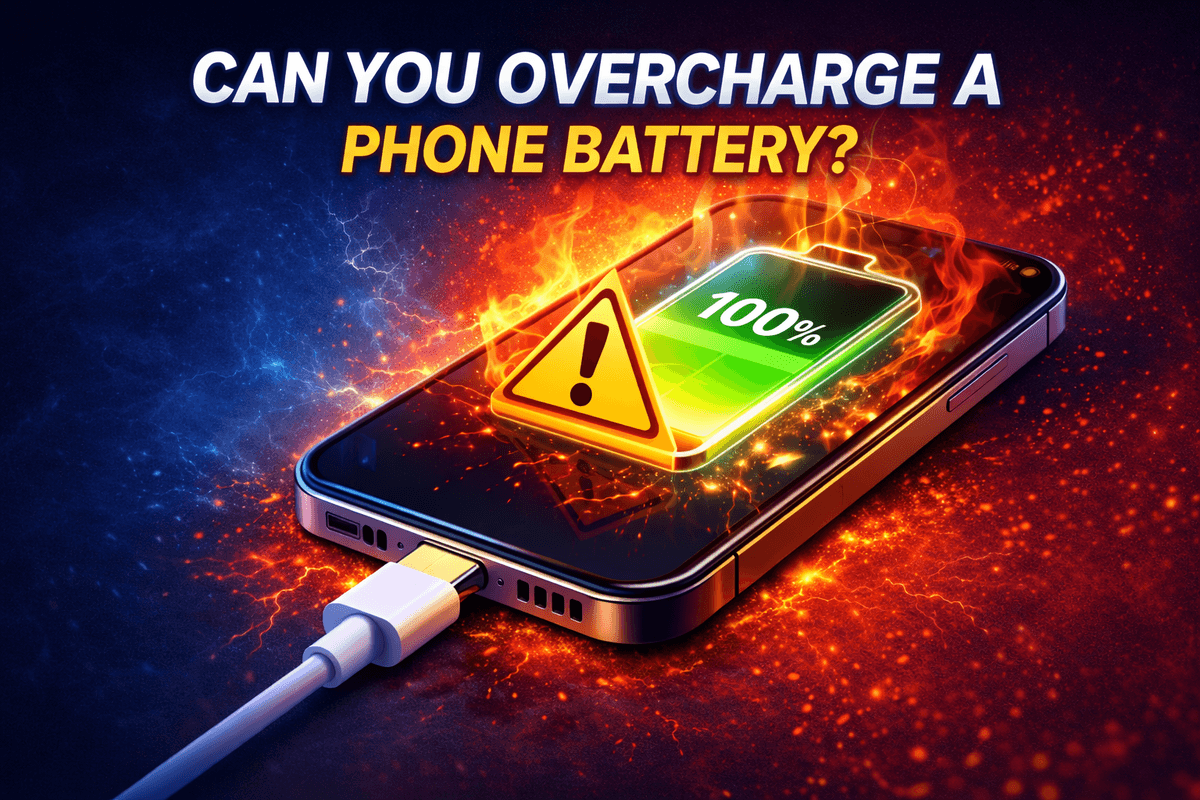
Table of Contents
- 1. Modern Phones Prevent Overcharging
- 2. What Happens After 100%?
- 3. Long Charging Time Can Still Affect Battery
- 4. Heat is a Bigger Problem Than Overcharging
- 5. Overnight Charging and Overcharging Myth
- 6. Importance of Using Quality Chargers
- 7. Smart Charging Features Reduce Risk
- 8. Best Charging Habits to Follow
- Final Notes
1. Modern Phones Prevent Overcharging
Today’s smartphones come with built-in protection systems that stop charging once the battery reaches 100%. This means your phone will not continue to receive power in a harmful way after it is fully charged.
Charging automatically stops at 100%
Prevents extra power from entering the battery
Protects against immediate overcharging damage
2. What Happens After 100%?
When your phone reaches full charge, it does not continuously charge at the same level. Instead, it slightly drops and recharges again to stay at 100%. This process is controlled by the system to keep the battery stable.
Battery stops charging at full level
Small recharge cycles maintain 100%
Controlled process ensures safety
3. Long Charging Time Can Still Affect Battery
Even though overcharging is prevented, keeping your phone plugged in for many hours can still affect battery health over time. Staying at full charge for long periods creates slight stress on the battery.
Battery remains at 100% for extended time
Long exposure can increase wear
Gradual impact on battery lifespan

4. Heat is a Bigger Problem Than Overcharging
The main issue during long charging sessions is heat, not overcharging. Heat can build up when a phone is plugged in for a long time or used heavily while charging.
Charging produces natural heat
Heat increases with longer charging duration
High temperatures reduce battery life
5. Overnight Charging and Overcharging Myth
Many people think overnight charging causes overcharging, but this is mostly a myth with modern phones. Devices are designed to handle overnight charging safely.
No direct overcharging overnight
Built-in systems manage charging cycles
Safe if proper chargers are used
6. Importance of Using Quality Chargers
Using a good quality charger ensures stable power delivery and reduces risks during long charging sessions. Cheap or fake chargers can cause inconsistent charging and overheating.
Use original or certified chargers
Avoid low-quality accessories
Stable power improves safety
7. Smart Charging Features Reduce Risk
Many smartphones now include smart charging features that optimize charging patterns. These features reduce the time your phone stays at 100% and help maintain battery health.
Charging slows down near full capacity
Adapts to your daily routine
Helps reduce battery stress

8. Best Charging Habits to Follow
Even though overcharging is not a major concern, following good charging habits can improve battery lifespan and performance.
Avoid keeping phone plugged in unnecessarily
Try to unplug after full charge
Keep battery between 20% and 80% when possible
Avoid excessive heat during charging
Final Notes
You cannot truly “overcharge” a modern smartphone because built-in systems prevent it. However, keeping your phone plugged in for long hours and exposing it to heat can still affect battery health over time. By following simple charging habits, you can keep your battery in good condition and extend its lifespan.
Try Our Battery Cycle Life Calculator
Estimate remaining battery cycle life and replacement timing.
Battery Cycle Life Calculator
Estimate remaining cycles and replacement timeline
Device
Usage & Health
Frequently Asked Questions

Written by
BatteryGuides Editorial Team
Our team of battery experts researches and tests every guide to ensure accuracy. We're committed to helping you get the most out of your phone, laptop, and solar batteries.